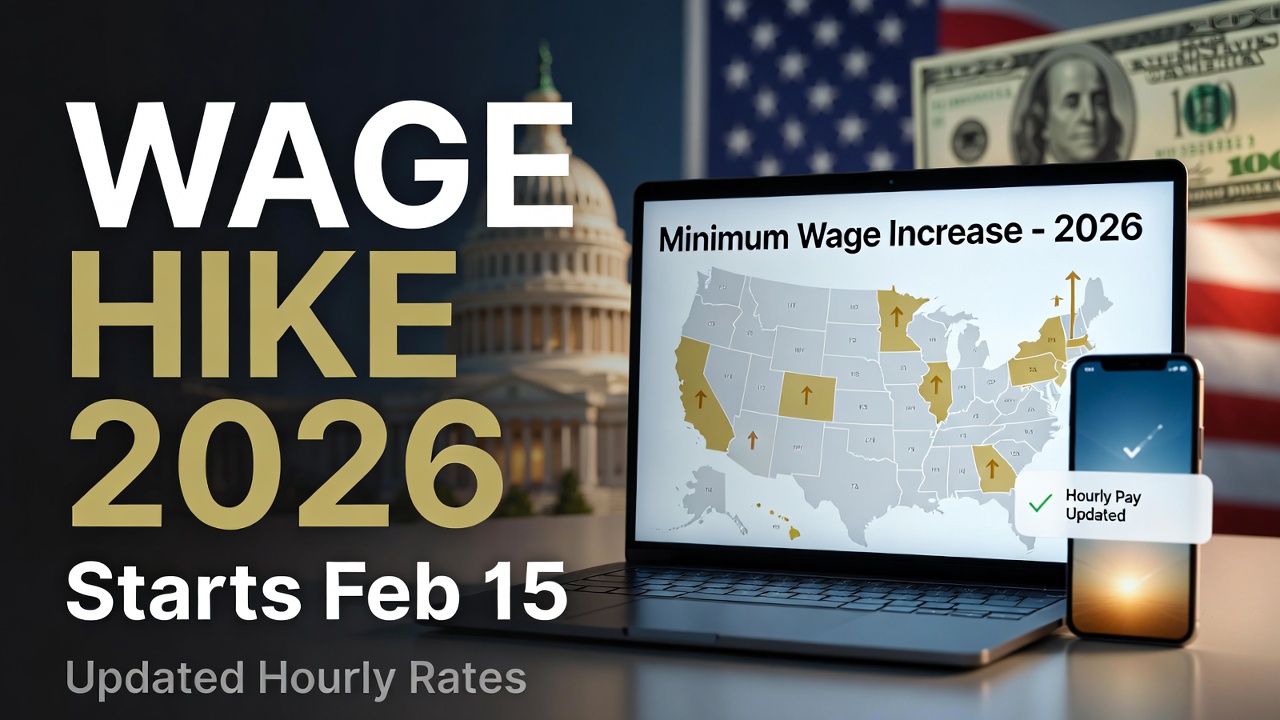
U.S. Minimum Wage Increase 2026: As 2026 progresses, minimum wage changes across the United States are bringing real pay increases for millions of workers. While the federal minimum wage has not risen and remains at $7.25 per hour, numerous states have raised their own minimum wage rates effective January 1, 2026, meaning many workers now earn more than before. These changes reflect ongoing efforts at the state and local level to help workers keep pace with the rising cost of living and improve financial stability after many years of wage stagnation.
Unlike federal law, which has kept the minimum wage unchanged for many years, state governments are taking the lead by adjusting wage floors according to inflation, legislative action, or voter-approved measures. This has resulted in a patchwork of different wage levels depending on where a worker lives and works.
State-Level Wage Increases Taking Effect in Early 2026
In 2026, at least 19 states raised their minimum wage rates, often to levels significantly above the federal standard. These increases generally took effect on January 1, 2026, based on scheduled law requirements or inflation indexing. Some states now have minimum wages near or above $15 per hour, reflecting broader nationwide trends.

For example, Arizona’s hourly minimum was raised to about $15.15, California to $16.90, Connecticut to $16.94, Hawaii to $16.00, and Washington state’s minimum is over $17.00. Other states with notable increases include Maine, Missouri, New Jersey, New York (with higher regional rates in New York City and surrounding counties), Rhode Island, and Vermont, among others.
These increases represent significant boosts for low-wage workers. Even moderate advances in states like Minnesota and Ohio moved wages forward modestly, showing a widespread push to improve hourly earnings across various regions.
Why Some Areas See Larger Wage Floors
The reason wage levels differ so much across the country is because state governments and local jurisdictions make their own decisions on minimum wage policy. Many states link annual increases to inflation so that workers’ pay rises with the cost of living. Others raised wages through legislation or ballot initiatives starting years earlier.

Because of this system, wage floors today can vary widely. Some states simply follow the federal minimum of $7.25 per hour where no state wage exists, while others require much higher rates above $15 per hour.
Federal Minimum Wage Still Unchanged
At the national level, the federal minimum wage has not been raised in nearly two decades — it has remained $7.25 per hour since 2009 and has not been updated by Congress. This long period without change has led many states to act independently to ensure workers earn more in line with living expenses.
Efforts to raise the federal minimum wage continue to surface in political discussions, but as of early 2026 no new federal increase has been enacted. Therefore, the hourly rate at the federal level still functions as a baseline that only applies where state or local laws do not set higher wages.

How These Changes Affect Workers
For many workers, the raises that took effect in 2026 mean more income for essentials such as rent, food, transportation, and healthcare. In states with higher wage floors, workers who previously earned near the bottom of the pay scale now have a significant boost in their hourly rate, increasing their monthly take-home pay.
In regions like New York City and Washington state, minimum wages have exceeded $17 per hour, and some cities have set even higher local wage floors, underscoring the growing emphasis on living wages in high-cost areas.
These changes also often include gradual adjustments for tipped workers — though federal tipped minimum wages remain low, many states that implement higher general minimums require employers to ensure total earnings reach the full state minimum through tips and wages combined.

Economic Impacts and Challenges
Supporters of minimum wage increases argue that higher pay levels help reduce reliance on public assistance, boost consumer spending, and strengthen local economies. Many low-income communities benefit when workers have more disposable income, which can ripple out to benefit small businesses and services.
At the same time, some employers, especially in rural areas or sectors with tight margins like food service, report challenges in adjusting to higher wage requirements. Studies show that such increases can lead to pricing adjustments, staffing changes, or even investment in automation in certain industries, although the overall employment impact varies widely across economic contexts.
What Employers Must Know
For businesses operating in states with higher wage floors, compliance is essential. Employers must ensure payroll reflects updated minimum wages, update internal notices and signage, and maintain accurate wage records. Failure to comply with state wage laws can result in penalties or legal issues.

Local laws can also establish additional requirements regarding scheduling, benefits, and wage transparency, so employers must stay informed about both state and municipal regulations.
Looking Ahead
While the federal minimum wage remains unchanged, state and local action continues to drive real increases in wages for millions of workers in 2026. With many states tying future adjustments to inflation or other economic indicators, this trend may continue in the years ahead, further diversifying how wages evolve across the country.
For workers and employers alike, staying informed about current wage laws and any scheduled changes is key to planning budgets, operating businesses, and navigating the modern economy.

Disclaimer
This article is for informational purposes only and does not constitute legal or financial advice. Wage laws and minimum wage rates vary by state and locality and may change over time. Always consult official state labor departments or qualified professionals for current minimum wage rules and compliance guidance.