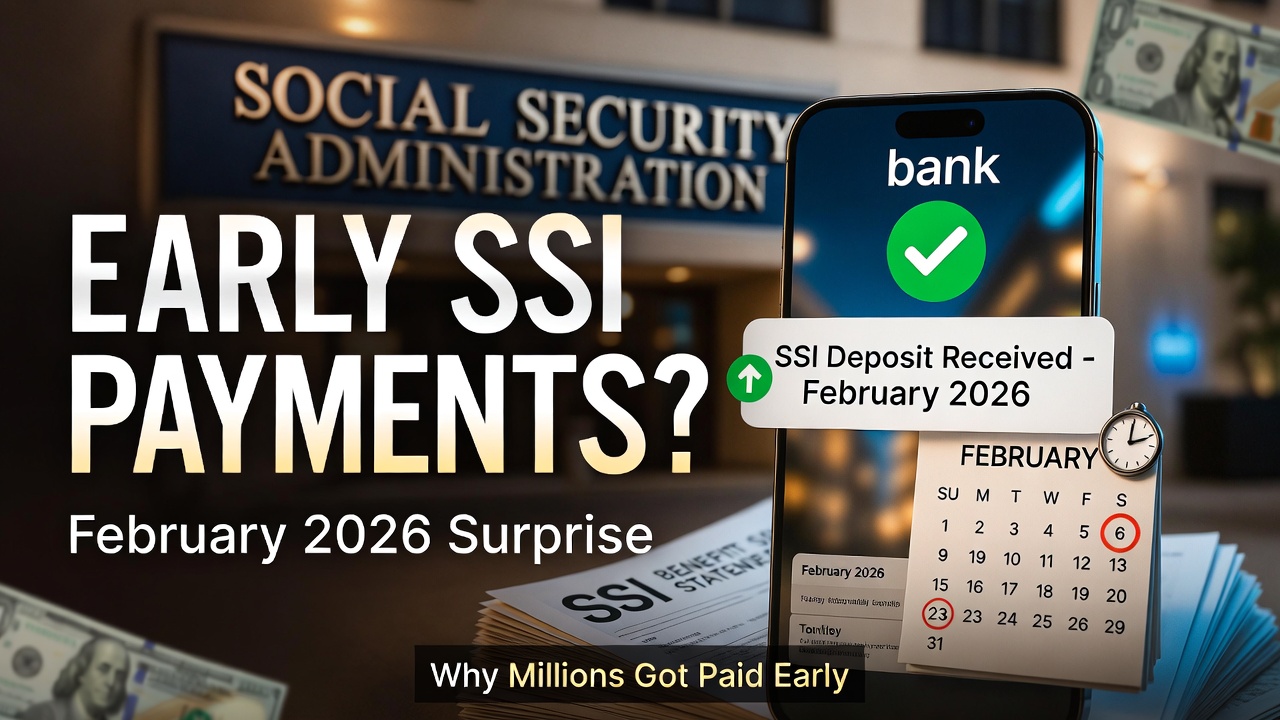
SSI February 2026 Payment Surprise: Many Supplemental Security Income recipients were surprised when their February 2026 payment showed up earlier than expected. For some, the deposit appeared at the end of January, leading to confusion and questions about whether this was a bonus or an extra payment. Social media quickly filled with rumors, adding to the uncertainty.
In reality, there is nothing unusual or new about this early payment. It follows long-standing Social Security rules that adjust payment dates when the calendar creates a conflict. Understanding this system helps recipients avoid stress and budget more effectively.
Understanding What SSI Is
Supplemental Security Income, commonly called SSI, is a federal program designed to help people with limited income and resources. It provides monthly financial support to seniors, individuals with disabilities, and others who meet strict eligibility requirements.

The program is managed by the Social Security Administration, but it is different from Social Security retirement or disability benefits. SSI is need-based, meaning payments depend on income, resources, and living arrangements rather than work history.
How SSI Payments Are Normally Scheduled
Under normal conditions, SSI payments are issued on the first day of each month. This schedule is simple and predictable, allowing recipients to plan rent, utilities, and other essential expenses.
Unlike other Social Security benefits, SSI does not use a staggered schedule based on birth dates. Everyone receiving SSI is paid on the same day, which is usually the first of the month.

Why February 2026 Created a Schedule Change
In February 2026, the first day of the month falls on a Sunday. The Social Security Administration does not issue payments on weekends or federal holidays. When this happens, a special timing rule applies.
According to long-standing policy, SSI payments are moved to the previous business day if the scheduled date is not a working day. This ensures beneficiaries are not forced to wait for their money.
The Exact Reason Payments Were Issued on January 30
Because February 1, 2026, falls on a Sunday, the Social Security Administration issued SSI payments on Friday, January 30, 2026. This is the closest business day before the scheduled payment date.

The payment issued on January 30 is still considered the February SSI benefit. It is not an advance, loan, or special distribution. It is simply a calendar adjustment.
Clearing Up the Bonus Payment Rumor
Many recipients wondered whether the early payment meant they were receiving extra money. Seeing two deposits close together can easily create that impression, especially for those managing tight budgets.
However, there is no bonus or additional SSI payment involved. The early deposit replaces the February 1 payment, meaning there will be no separate SSI deposit later in February.

Why This Confusion Happens So Often
Calendar-based payment adjustments happen almost every year, sometimes more than once. Whenever the first of the month falls on a weekend or holiday, SSI payments are shifted.
Each time this occurs, rumors tend to spread online. Headlines may suggest surprise checks or new policies, but the explanation is almost always tied to simple scheduling rules.
Will This Change Future SSI Payments
The early February 2026 payment does not affect future months. March 2026 payments are expected to follow the normal schedule since March 1 falls on a regular business day.

Benefit amounts, eligibility rules, and payment methods remain unchanged. The only difference is the timing of the February deposit, not the structure of the program.
How Recipients Should Budget After an Early Payment
It is important for SSI recipients to treat the January 30 deposit as their February income. Spending it too quickly can lead to financial stress later in the month when no new payment arrives.
Careful budgeting is especially important for rent, utilities, food, and medical expenses. Planning ahead helps avoid the feeling of running out of money before the next scheduled payment.

The Importance of Knowing the SSI Payment Calendar
Keeping track of the official SSI payment calendar can prevent surprises. The Social Security Administration publishes annual schedules that clearly show when early payments will occur.
Knowing these dates allows recipients to plan ahead and ignore misleading information. It also helps caregivers and family members provide better financial support when needed.
Why Early Payments Are Actually a Good Thing
Although early payments can be confusing, they are designed to protect beneficiaries. Without this rule, recipients would have to wait until after the weekend or holiday to receive their money.

The early deposit ensures uninterrupted access to funds, which is especially important for people who rely on SSI as their primary or only source of income.
Staying Informed and Avoiding Misinformation
The best way to stay informed is by relying on official Social Security Administration announcements. Unofficial websites and social media posts often exaggerate or misunderstand routine payment changes.
If something seems unclear, checking official sources or contacting Social Security directly is always safer than assuming a rumor is true.

SSI recipients received their February 2026 payment early because February 1 fell on a Sunday. The deposit made on January 30 is the regular February benefit, not an extra or bonus payment.
Understanding how weekend and holiday adjustments work helps recipients budget wisely and avoid unnecessary worry. With the right information, early payments become predictable rather than confusing.
Disclaimer
This article is for informational purposes only and does not replace official guidance from the Social Security Administration. SSI payment schedules, rules, and benefit amounts are governed by federal regulations and may vary by individual. Recipients should rely on official SSA notices or contact the Social Security Administration directly for personalized information.