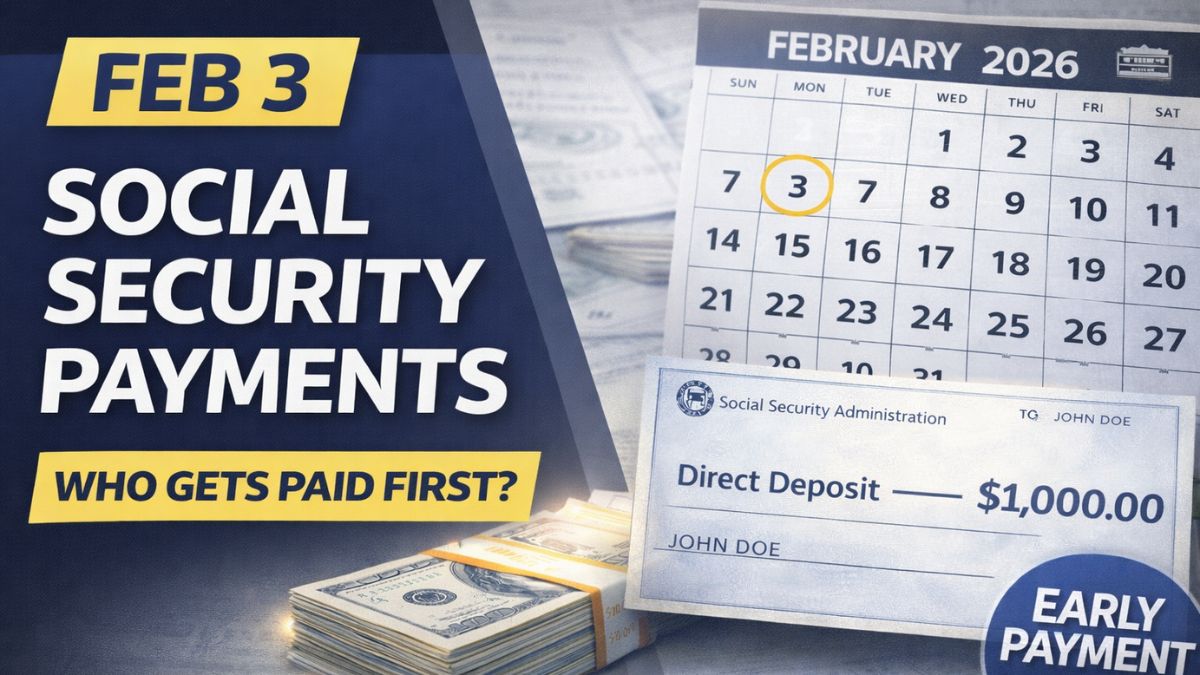
The Social Security payment schedule for February brings welcome clarity for many beneficiaries, especially those who receive their monthly benefit at the very start of the month. Some people are scheduled to receive their payment as early as February 3. This early deposit is not a bonus and does not mean extra money. It follows a long-standing system that the Social Security Administration has used for decades to keep payments organized and reliable.
Understanding why this early payment exists and who qualifies for it can make monthly budgeting much easier. When people know exactly when their money will arrive, they can plan rent, groceries, utilities, and other expenses with more confidence and less stress.
Why Social Security Uses Different Payment Dates
Social Security benefits are not sent to everyone on the same day. Instead, payments are spread across the month using a staggered schedule. This approach helps prevent banking systems from becoming overloaded and reduces the risk of technical delays. With tens of millions of payments sent each month, spacing them out is essential for smooth operations.

February 3 is one of the earliest dates in the monthly cycle. It exists because some beneficiaries were placed on an early payment track long before the current system was introduced. That schedule has remained in place to avoid disrupting people who have relied on early-month payments for many years.
Who Receives Social Security Payments on February 3
The main group receiving Social Security payments on February 3 includes people who started collecting benefits before May 1997. When the Social Security Administration updated its payment system, individuals already receiving benefits were allowed to keep their original payment timing. As a result, they continue to receive their money at the beginning of each month.
Many Supplemental Security Income recipients also receive payments around the start of the month. SSI is designed to support people with limited income and resources, so timely access to funds is especially important. If the first day of the month falls on a weekend or holiday, SSI payments are usually sent on the closest business day before that date.

What Happens If You Receive Both SSI and Social Security
Some beneficiaries qualify for both Social Security and Supplemental Security Income. In these cases, the SSI payment usually arrives first, followed by the Social Security benefit shortly after. This can result in two deposits arriving close together, which can be helpful for covering essential expenses early in the month.
While this timing may feel like a special situation, it is part of the standard payment process. The amounts and dates are determined by eligibility rules and long-established schedules rather than any new or temporary program.
How Payment Dates Work for Everyone Else
People who began receiving Social Security benefits after May 1997 follow a different schedule. Their payment date is based on their birth date and falls on a Wednesday. Those born earlier in the month are paid earlier, while those born later receive payments later in the month.

This Wednesday-based system spreads payments across several weeks. It ensures that each group receives benefits on a predictable schedule while keeping the payment system stable. Although not everyone is paid at the same time, the system is designed to be fair and dependable.
How Social Security Payment Amounts Are Determined
The amount you receive in February depends on your personal work and earnings history. Social Security benefits are calculated using your lifetime taxable earnings and the age at which you chose to start collecting benefits. People who worked longer or earned more generally receive higher monthly payments.
Any cost-of-living adjustment that took effect at the beginning of the year is included in February payments. These adjustments are meant to help benefits keep up with inflation. Even with these increases, payment amounts still vary widely from person to person.

How Payments Are Sent to Beneficiaries
Most Social Security recipients receive their payments through direct deposit into a bank account. This is the fastest and most secure method. Funds are usually available on the scheduled payment date without delays caused by mail delivery.
Some beneficiaries still receive paper checks, although this method is less common. Mailed checks can arrive later than expected because of postal delays. For this reason, many people choose to switch to electronic payments, including direct deposit or approved prepaid debit cards.
What to Do If Your February 3 Payment Is Delayed
If your February 3 payment does not arrive as expected, there is no need to panic right away. Banks sometimes take extra time to process deposits, especially if weekends or holidays are nearby. Waiting at least one business day is usually recommended.

If the payment still does not appear, checking your account details and contacting Social Security can help resolve the issue. Most delays are caused by minor banking or record problems that can be fixed once identified.
Why Knowing Your Payment Date Is Important
Understanding your Social Security payment date makes monthly financial planning much easier. People who receive payments on February 3 benefit from having funds available at the start of the month, which helps with rent and other early expenses.
Knowing that early payments are part of the regular system—not extra money—also helps avoid confusion. The schedule exists to ensure consistency and reliability for all beneficiaries.

The February 3 Social Security payment is simply part of a long-established schedule. It applies mainly to people who started receiving benefits before May 1997 and certain SSI recipients. It does not represent extra income or a special program.
By understanding how the payment system works, beneficiaries can better manage their finances and avoid unnecessary worry. Staying informed helps ensure that expectations match reality.
Disclaimer
This article is for informational purposes only and is written in simple language for general understanding. It does not provide legal, financial, or benefits advice. Social Security rules, payment dates, and eligibility conditions can change based on government policy and individual circumstances. For the most accurate and up-to-date information, readers should contact the Social Security Administration or consult official government sources.