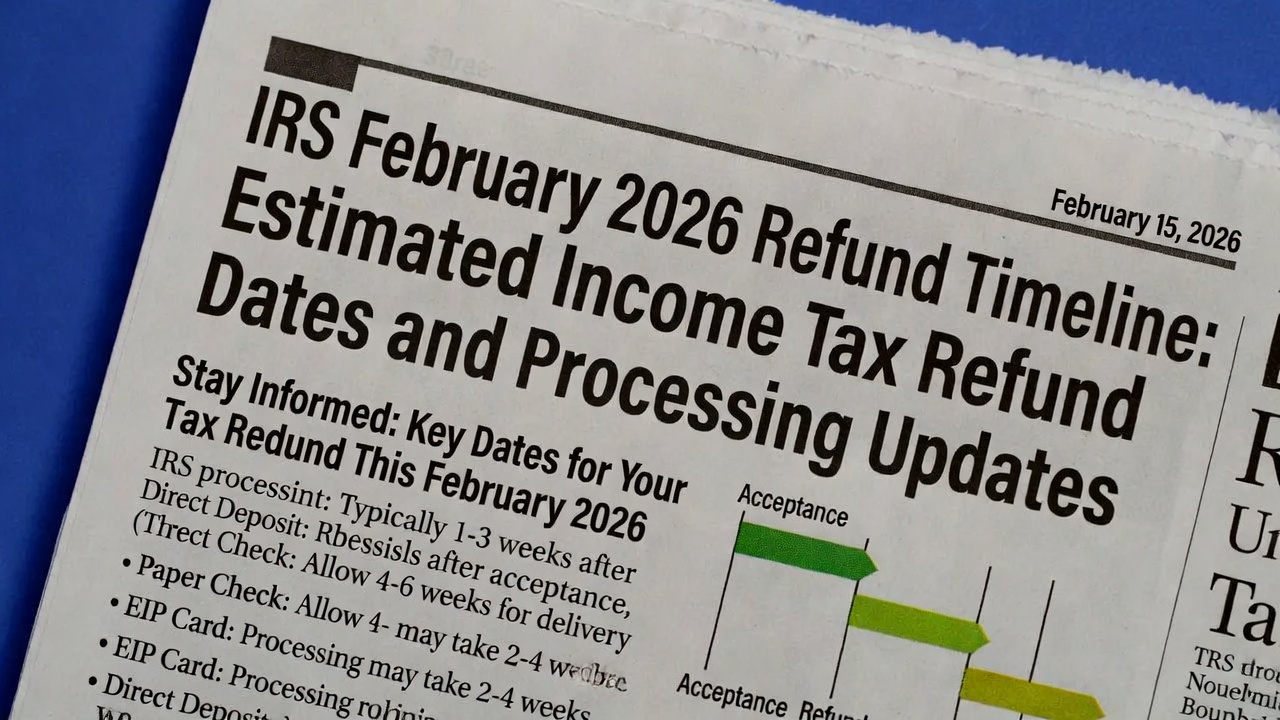
IRS February 2026 Refund Timeline: As the 2026 tax season moves into full swing, one question is on the minds of millions of Americans: when will the tax refund arrive? For many households, a refund is not extra money but a necessary source of relief used to pay rent, clear credit card balances, or manage everyday expenses. The IRS February 2026 refund timeline has gained special attention because people are eager for clarity after years of delays and uncertainty during earlier tax seasons.
February has always been an important month for refunds, especially for early filers. It is the period when the first wave of approved refunds begins reaching bank accounts. At the same time, it is also when confusion is highest, as some refunds move quickly while others are held back. Understanding why these differences exist can help taxpayers stay calm and plan realistically.
Why February Refunds Matter So Much
For many families, a tax refund is already allocated before it arrives. Rising costs for food, utilities, and healthcare mean that refunds often go straight toward essential bills. February refunds are especially valuable because they come shortly after the expensive holiday season and before spring-related expenses begin.

In 2026, more taxpayers than usual filed early, hoping to receive refunds sooner. This has increased interest in the IRS February 2026 refund timeline. While technology has improved processing speed for many returns, not everyone experiences the same outcome. Filing details, credits claimed, and verification checks all play a role in how fast money is released.
When the IRS Started Processing 2026 Returns
The IRS officially opened the 2026 filing season in late January. Once returns began entering the system, they were processed in batches rather than all at once. For electronic filers with simple returns, the IRS aims to issue refunds within about 21 days, and early signs suggest this goal is being met for many taxpayers.
Paper returns continue to take much longer. Even with system upgrades, mailed tax forms still require manual handling. This often adds weeks to processing time. Taxpayers who filed by mail in early January may not see refunds until March or later, which highlights the growing gap between electronic and paper filing methods.

How Refund Timing Works in February 2026
Refunds are not issued randomly. The IRS follows internal processing cycles, and direct deposits are usually released during the middle of the week. Based on current patterns, taxpayers who filed electronically in late January are beginning to see refunds in early February. Those who filed closer to the end of January may receive deposits later in the month.
These timelines mainly apply to uncomplicated returns. If a return includes corrections, income mismatches, or unusually high refund amounts, it may fall outside the standard window. Even small errors can trigger additional review, which slows down the refund without any warning.
Why Some Refunds Are Delayed This Year
One of the biggest reasons for delays in the IRS February 2026 refund timeline is increased fraud prevention. The IRS now uses more automated checks to compare tax returns with employer and bank reports. If the information does not match exactly, the system may pause the refund until the issue is resolved.

Refundable tax credits also affect timing. Credits like the Earned Income Tax Credit and the Additional Child Tax Credit are legally restricted from being paid before mid-February. Even if a return is approved early, refunds involving these credits cannot be released until the hold period ends. This can be frustrating for families who depend on these funds.
Direct Deposit Versus Paper Checks
How a refund is delivered makes a major difference in timing. Direct deposit is by far the fastest option. Once a refund is approved, electronic transfers often reach bank accounts within one to three business days. Many taxpayers see their money almost immediately after the IRS marks the refund as sent.
Paper checks take much longer. After approval, checks must be printed and mailed, and delivery depends on postal service timelines. This process can easily add one or two extra weeks. For this reason, taxpayers who choose paper checks often receive February refunds in March instead.

Tracking Your Refund the Right Way
The IRS provides official tools to track refund progress, with “Where’s My Refund” being the most widely used. This system updates once per day and shows whether a return has been received, approved, or sent. Many people worry when the status does not change for several days, but this is normal during processing.
If a refund remains pending beyond 21 days, it may indicate additional verification is needed. Identity confirmation requests have become more common in 2026. While inconvenient, these checks are meant to protect taxpayers and prevent fraudulent refunds from being issued.
What Taxpayers Can Expect Going Forward
Most taxpayers who filed early, used electronic filing, and chose direct deposit should receive refunds by the end of February. Those who claimed certain credits or filed later may see payments arrive in March. Compared to earlier years marked by severe backlogs, the 2026 season is showing gradual improvement.

Even with better systems, delays cannot be completely eliminated. Accuracy and patience remain essential. Filing correct information and responding quickly to any IRS notices are the best ways to avoid extended waits and ensure refunds arrive as smoothly as possible.
The IRS February 2026 refund timeline reflects a balance between speed and security. While many taxpayers will receive refunds quickly, others will experience delays due to credits, verification checks, or filing methods. Knowing how the system works helps reduce stress and unrealistic expectations.
For households counting on refunds, planning conservatively is the safest approach. Relying on official IRS tools and verified information ensures better financial decisions during tax season.

Disclaimer
This article is for informational purposes only and does not provide tax, legal, or financial advice. IRS refund timelines vary based on individual circumstances, filing accuracy, and verification requirements. Readers should refer to official IRS resources or consult a qualified tax professional for guidance specific to their situation.