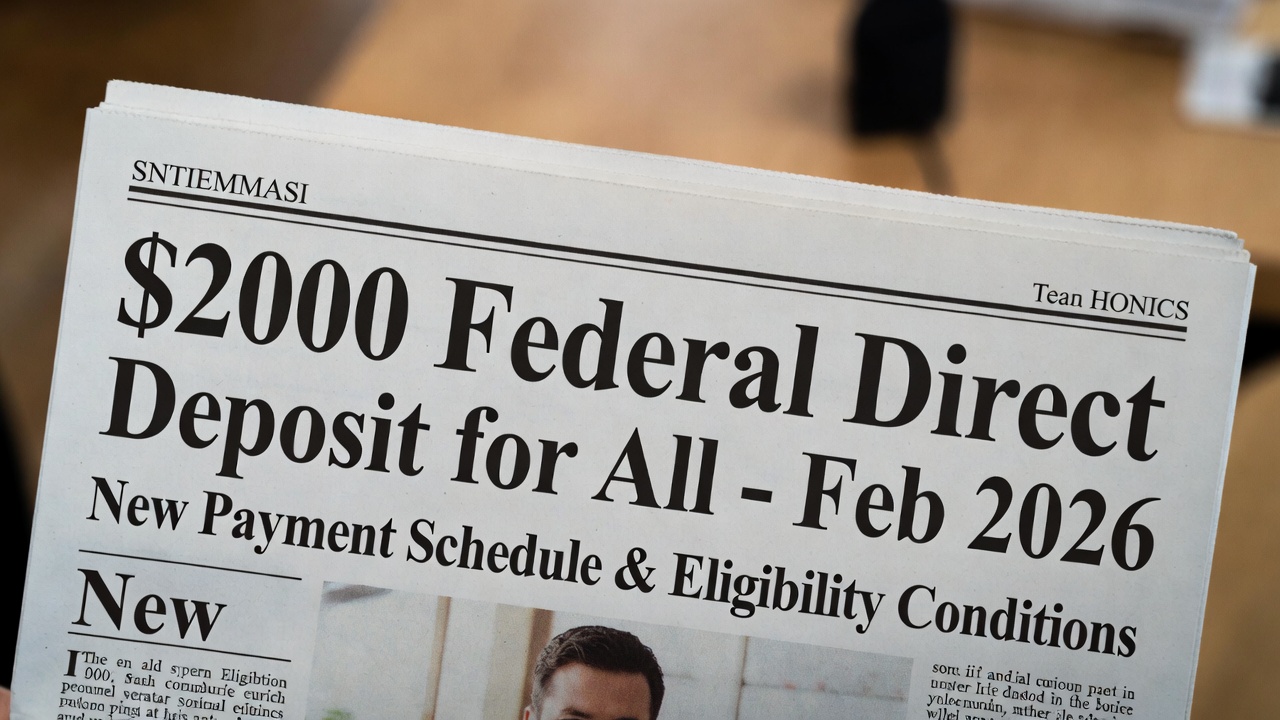
$2000 Federal Direct Deposit for All: In early 2026, talk of a possible $2,000 federal direct deposit has gained widespread attention across the United States. Social media posts and online headlines often describe it as “$2,000 for everyone,” which has created both hope and confusion. With inflation continuing to affect everyday essentials like food, rent, electricity, and medical care, many households are eager for any form of financial relief. However, it is important to separate confirmed facts from speculation.
As of February 2026, there is no guaranteed or automatic $2,000 federal direct deposit. The idea remains part of policy discussions and has not been approved by Congress. Understanding the current status helps families avoid misinformation and plan their finances realistically instead of relying on uncertain claims.
Why a $2,000 Federal Payment Is Being Discussed
The idea of a $2,000 federal payment is rooted in ongoing economic challenges faced by millions of Americans. Even though wages have increased in some sectors, many families still struggle because living costs have risen faster than income. Groceries, housing, transportation, and healthcare continue to take up a large share of monthly budgets, leaving little room for savings.

Supporters of the proposal argue that a one-time direct payment could provide immediate relief. They believe that sending money directly to households is a simple and fast way to ease financial pressure. Another argument is that extra cash in consumers’ hands could boost spending in local businesses, helping the broader economy in the short term.
Policy Debate and Economic Concerns
While some lawmakers support the idea of a direct payment, others raise serious concerns. Critics argue that large, broad payments could increase inflation further and add to the federal deficit. They also question whether sending money to all income groups is the most effective approach, suggesting that targeted aid for lower-income households may be more responsible.
This debate has slowed progress on the proposal. As of now, there is no clear agreement in Washington on whether a $2,000 payment is the right solution. The issue remains under discussion, and no final policy decision has been made.

Current Legislative Status
For a $2,000 federal payment to become reality, Congress must pass a law approving the funding and rules. The President would then need to sign it into law. After that, federal agencies such as the U.S. Treasury and the Internal Revenue Service would be responsible for issuing the payments. For seniors and disability beneficiaries, the Social Security Administration would also play a role.
As of February 2026, no such law has been enacted. While draft ideas and informal proposals exist, they do not carry legal authority. Until legislation is officially passed, the payment remains uncertain.
Why February 2026 Is Often Mentioned
February 2026 is frequently mentioned in discussions because it aligns with federal budget planning and the tax season. If a payment were approved early in the year, the government could use existing tax and benefit systems to distribute funds more efficiently. This timing could allow for faster processing compared to building a new system from scratch.

However, this timeline is purely speculative. Any delay in Congressional approval could push payments to later months or cancel the idea altogether. There is currently no official schedule for a February deposit.
Possible Eligibility Rules
Eligibility rules are one of the most debated aspects of the proposal. Most ideas suggest that recipients would need to be U.S. residents with a valid Social Security number. Recent tax filings or federal benefit records would likely be used to determine eligibility automatically.
Some proposals support a universal payment, while others suggest income limits similar to past relief programs. Under income-based plans, higher earners might receive a reduced payment or none at all. Social Security retirees, SSI and SSDI recipients, and working taxpayers are generally expected to be included, but no final rules exist yet.

How Payments Would Likely Be Sent
If the payment were approved, the government would likely rely on existing systems to send the money. Direct deposit would be the fastest method for those with bank information on file with the IRS or Social Security Administration. Individuals without direct deposit details would likely receive paper checks by mail.
In some cases, prepaid federal debit cards could be used, especially for people without bank accounts. The exact delivery method would depend on individual records and the final legislation.
Tax Treatment and Impact on Other Benefits
One of the biggest concerns for recipients is whether the $2,000 payment would be taxable. Most draft proposals suggest that it would not count as taxable income. This means it would not reduce tax refunds or increase tax bills for recipients.
Early discussions also indicate that the payment would not affect eligibility for benefits such as Social Security, SSI, SSDI, SNAP, Medicaid, or housing assistance. However, official guidance would only be released after the law is passed.
How to Prepare Without Assuming Approval
Since the payment is not approved, no action is required at this time. Still, individuals can take basic steps to stay prepared. Filing recent tax returns, keeping direct deposit information updated, and ensuring mailing addresses are correct can help avoid delays if any future payment is authorized.
Most importantly, staying informed through official government sources helps prevent confusion and false expectations. Relying on rumors can lead to poor financial decisions.

Misinformation and Scams to Watch Out For
Claims that the $2,000 payment is already guaranteed are incorrect. Scammers often use such rumors to trick people into sharing personal information or paying fake fees. Federal agencies never ask for sensitive details through unsolicited calls, emails, or text messages.
Official confirmation will always come through government announcements and trusted news outlets. Being cautious protects both finances and personal data.
The proposed $2,000 federal direct deposit reflects ongoing concerns about affordability and economic stability in the United States. While the idea has attracted attention, it remains dependent on Congressional approval and funding decisions. Until a law is passed, all claims of guaranteed payments should be treated with caution.

If approved in the future, the payment would represent another form of direct cash relief aimed at helping Americans manage economic pressure. For now, understanding the facts is the best way to stay informed and financially prepared.
Disclaimer: This article is for informational purposes only. Policies, eligibility rules, and timelines may change based on legislative decisions. Readers should rely on official announcements from Congress, the U.S. Treasury, the IRS, or the Social Security Administration for the most accurate and up-to-date information.