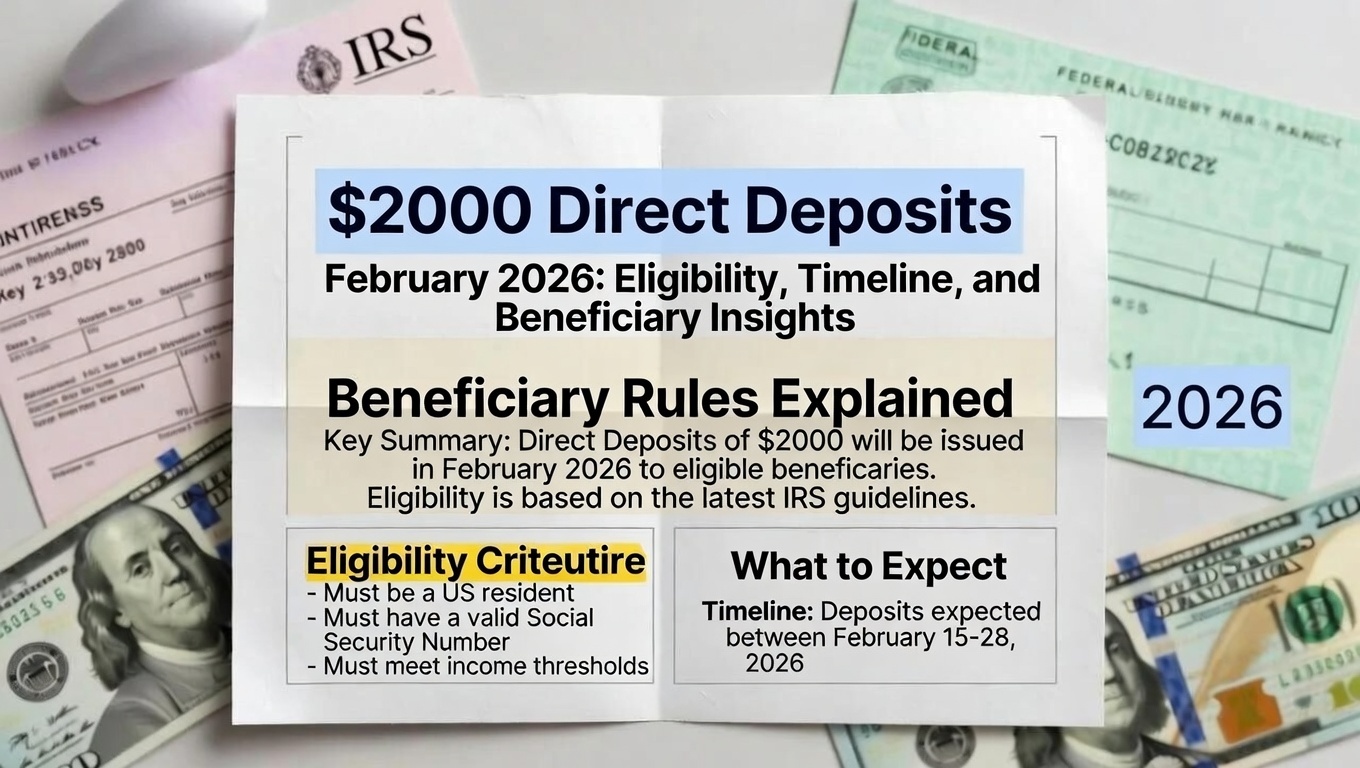
$2000 Direct Deposits February 2026: As February 2026 approaches, many Americans are once again hearing claims about a $2,000 direct deposit arriving from the federal government. These messages are spreading quickly through social media, messaging apps, and online headlines. For households dealing with rising prices and tight budgets, such news can sound like a welcome relief. However, it is important to be clear from the start that there is no newly approved nationwide $2,000 stimulus payment for February 2026.
The deposits people are noticing right now are not part of a new federal relief program. Instead, they are linked to existing systems such as Social Security, SSI, SSDI, veterans’ benefits, and regular IRS tax refunds. No new universal payment has been passed by Congress.
Why January and February Often Cause Payment Confusion
The early months of the year regularly create confusion around federal payments. January and February are when several financial events overlap at the same time. Social Security benefits reflect annual cost-of-living adjustments, tax season begins, and early filers may start receiving refunds. When these payments arrive close together, they can appear larger than usual.

Bank processing also plays a role in this confusion. Federal holidays and weekends can push deposits forward or backward by a day or two. When money appears earlier than expected, it can easily be mistaken for a new or special payment, even though it is not.
Understanding Where the $2,000 Amount Comes From
There is no rule in federal law that guarantees a $2,000 payment to everyone. The reason this number appears so often is because many benefit payments and refunds naturally fall near that range. Some retirees receive Social Security checks close to $2,000 based on their work history and retirement age.
Low-income taxpayers who qualify for refundable tax credits may also see refunds near this amount. Veterans receiving disability or pension benefits may experience similar figures. These amounts are calculated individually and are not the result of a new government decision.

Who Is Most Likely to See Deposits Near $2,000
People most likely to notice deposits close to $2,000 include retirees with steady work histories, veterans with qualifying benefit levels, and families claiming refundable tax credits. For these groups, the payment amount is based on personal circumstances rather than a flat federal benefit.
Income level, filing status, number of dependents, and past earnings all influence the final amount. Because of these factors, two people can receive very different deposits even if they live in similar situations.
Why Federal Payments Are Never the Same for Everyone
Federal benefit programs are built on formulas, not fixed payments. Social Security depends on how much a person earned over their lifetime and when they chose to start benefits. Tax refunds depend on income, withholding, credits, and deductions claimed during the year.

This formula-based system means that no two households receive identical payments. The idea of a universal amount arriving for everyone at the same time does not apply to these existing programs.
How Payment Timing Really Works
Each federal payment program follows its own schedule. Social Security payments are sent based on a person’s birth date or when they first started receiving benefits. SSI follows a different calendar, often sending payments early when the first of the month falls on a weekend.
Tax refunds depend on when a return is filed and how quickly it is processed. Direct deposit is usually faster than paper checks. On top of this, banks may release funds early or wait until the official posting date, which can make timing feel unpredictable.

The Role of Banking Delays and Early Releases
Banks do not all handle deposits the same way. Some financial institutions make federal funds available as soon as they receive notice, while others wait until the official payment date. This difference can create the impression that something new has happened.
When one person sees money earlier than another, rumors can spread quickly. In reality, it is often just a difference in banking policy rather than a new government action.
Misinformation and Scams Around $2,000 Payments
Whenever payment rumors spread, scams follow closely behind. Fraudsters use headlines about “guaranteed $2,000 deposits” to trick people into sharing personal or banking information. These messages may look official but are not legitimate.

Government agencies such as the IRS and Social Security Administration do not contact people through random calls, texts, or social media messages asking for sensitive details. Any real payment would be announced clearly through official government channels.
What This Situation Really Tells Us About 2026
The attention around $2,000 deposits says more about financial stress than new policy. Many households are still struggling to manage expenses, which makes any sign of extra money feel important. Existing benefits and tax refunds explain most of the deposits being seen right now.
If a new relief program were ever approved, it would require public debate, congressional approval, and formal announcements. There is no indication that such a process has happened for February 2026.

Final Verdict on February 2026 Payments
There is no confirmed $2,000 federal stimulus deposit for February 2026. Deposits near this amount are coming from overlapping Social Security benefits, disability payments, veterans’ benefits, and IRS tax refunds. These are normal payments based on existing rules.
Households should rely on official government sources for accurate information and avoid making financial plans based on online rumors. Understanding how current systems work can help reduce stress and confusion.
Disclaimer
This article is for informational purposes only and does not provide financial, tax, or legal advice. As of now, no universal $2,000 direct deposit has been approved for February 2026. Payment amounts and eligibility depend on individual circumstances and official program rules. Readers should verify information through official IRS or Social Security resources before making financial decisions.